
page_banner

Products

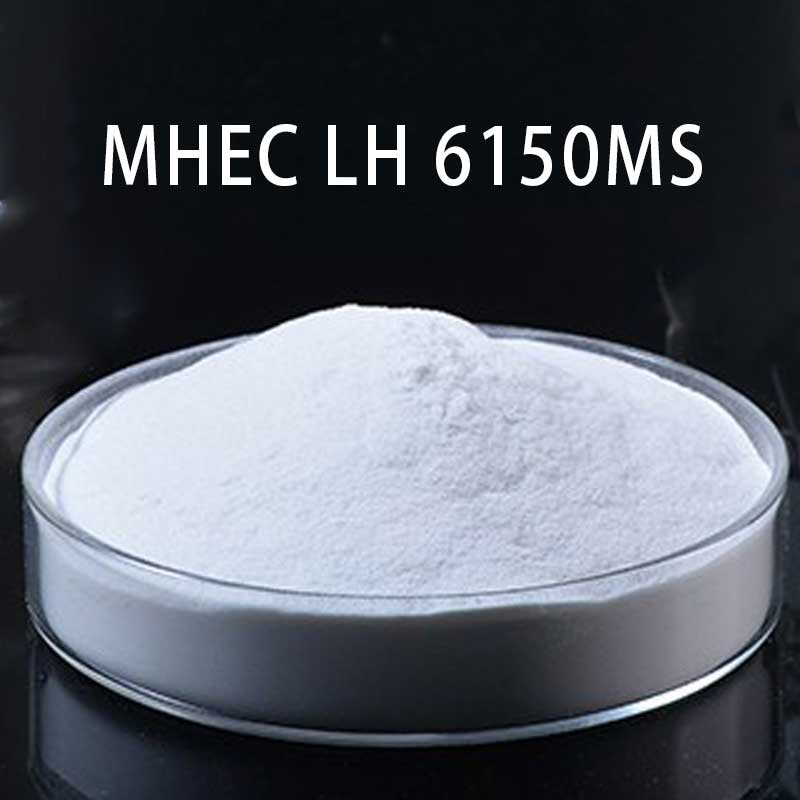
MHEC LH 6150MS

EipponCell® MHEC LH 6150M is derived from cotton and wood by undergoing a process involving alkalization, ethylene oxide, and methyl chloride etherification.

MHEC is a type of non-ionic cellulose mixed ether, characterized by its molecular structure [C6H7O2(OH)3-m-n(OCH3)m(OCH2CHOHCH3)n]x.   The varying proportions of methoxyl and hydroxyethyl groups in MHEC result in different viscosities and levels of product substitution uniformity.   This leads to the creation of different varieties and grades of products with distinct performance characteristics.

MHEC exhibits favorable properties such as dispersing, emulsifying, thickening, bonding, water-retention, and gel-retention.   It is soluble in water and can also be dissolved in ethanol and acetone below 70% concentration.   Additionally, the unique structure of MHEC allows for direct solubility in ethanol.

Where to buy Cas MHEC LH 6150MS


Product Detail

Product Tags

Specification of MHEC LH 6150MS

Chemical name Methyl Hydroxyethyl Cellulose
Synonym Cellulose ether, 2-hydroxyethyl methyl cellulose, Cellulose, 2-hydroxyethyl methyl ether, hydroxyethyl Methyl cellulose, MHEC, HEMC
CAS number 9032-42-2
Brand EipponCell
Product Grade MHEC LH 6150MS
Solubility Water Soluble Cellulose ether
Physical form White to off-white cellulose powder
Moisture Max.6%
PH 4.0-8.0
Viscosity Brookfield 2% solution 55000-65000mPa.s
Viscosity NDJ 2% solution 120000-180000mPa.S
Ash content Max5.0%
Mesh size 99% pass 100mesh
HS code 39123900

Application of MHEC LH 6150MS

EipponCell® MHEC LH 6150MS methyl hydroxyethyl cellulose demonstrates solubility in water as well as certain organic solvents.  It exhibits the ability to dissolve in cold water, and the maximum concentration achievable depends on its viscosity.  Solubility varies with viscosity, with lower viscosity corresponding to greater solubility.

MHEC products are non-ionic cellulose ethers and do not function as polyelectrolytes.  As a result, they display relative stability in aqueous solutions containing metal salts or organic electrolytes.  However, excessive addition of electrolytes can lead to gelation and precipitation.

The aqueous solutions of MHEC products possess surface-active properties, allowing them to function as colloidal protective agents, emulsifiers, and dispersants.

Upon heating the aqueous solution of MHEC products to a certain temperature, it becomes opaque, forms gels, and precipitates.  However, continuous cooling restores the solution to its original state.  The temperature at which gelation and precipitation occur primarily depends on the presence of lubricating agents, suspending agents, protective colloids, emulsifiers, and similar factors.

Documents of MHEC LH 6150MS

Recommended HEMC for Detergent
satrsd (3)
satrsd (2)

Address

 Mayu Chemical Industry Park, Jinzhou City, Hebei, China

E-mail

sales@yibangchemical.com

Tel/Whatsapp

+86-311-8444 2166
+86 13785166166 (Whatsapp/Wechat)
+86 18631151166 (Whatsapp/Wechat)


  • Previous:
  • Next:

  • Write your message here and send it to us

    Latest information

    news

    news_img
    Methyl hydroxypropyl cellulose (HPMC) cellulose ether is one of the most important base materials used in mortar. It has good water retention, adhesion and thixotropic characteristics due to ...

    The Role of Cellulose Ethers in Imp...

    Tile adhesive performance directly affects the long-term stability, bonding strength, and durability of tile installations. As construction standards continue to rise, manufacturers increasingly rely on cellulose ethers—particularly HPMC (Hydroxypropyl Methyl Cellulose) and MHEC (Methyl Hydroxyet...

    How RDP Improves Flexibility and Cr...

    Modern construction materials require more than just compressive strength—they must also withstand substrate movement, temperature changes, impact, and long-term environmental stress. RDP (Redispersible Polymer Powder) has become an essential additive for improving flexibility, crack resistance, ...

    Why Manufacturers Choose Kingmax fo...

    In the competitive dry-mix mortar industry, the quality and stability of HPMC (Hydroxypropyl Methyl Cellulose) are crucial for ensuring consistent performance in products such as tile adhesives, wall putty, skim coat, plaster, self-leveling compounds, and gypsum-based materials. For manufacturers...