
page_banner

Products

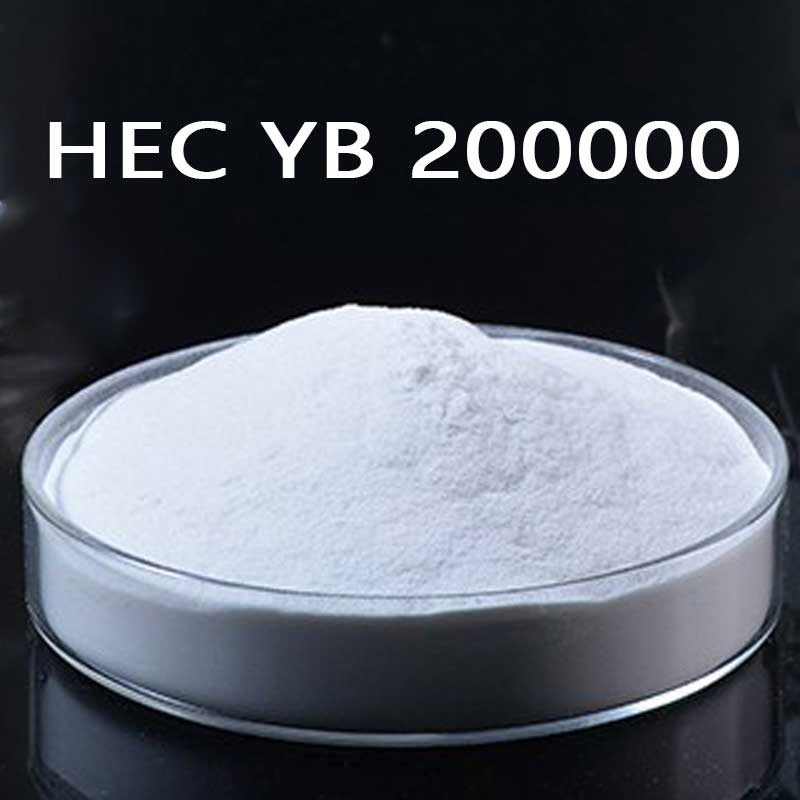
HEC YB 200000

EipponCell® HEC YB 200000 Hydroxyethyl cellulose ether exhibits robust thermal stability up to 140 ℃ and remains free from precipitation under acidic conditions.   The aqueous solution of HEC manifests as a highly pseudoplastic fluid, with apparent viscosity decreasing in tandem with an increase in shear rate.   Notably, the pseudoplasticity of low molecular weight solutions closely resembles that of Newtonian fluids, showcasing minimal viscosity changes within the pH range of 2-12, albeit experiencing a decrease beyond this range.

Impressively, HEC demonstrates exceptional salt tolerance in the presence of electrolytes, ensuring that high salt concentrations do not induce viscosity changes through precipitation or sedimentation residues. Moreover, HEC boasts a water retention capacity twice that of methyl cellulose (MC), coupled with effective flow regulation.   Temperature dynamics also influence HEC’s behavior, with viscosity decreasing as the solution temperature rises and increasing as the temperature decreases.   These diverse attributes underscore the versatility and reliability of HEC YB 200000 in various applications.

Where to buy Cas HECY YB 200000


Product Detail

Product Tags

Specification of HEC YB 200000

Chemical name Hydroxyethyl Cellulose
Synonym 2-Hydroxy ethyl cellulose; Cellulose hydroxyethyl ether, Cellulose ether, Hydroxyethyl Cellulose
CAS number 9004-62-0
Brand EipponCell
Product Grade HEC YB 200000
Solubility Water Soluble Cellulose ether
Physical form White to off-white cellulose powder
PH(1%) 5.0 – 8.0
Degree of substitution 1.8 - 2.5
Viscosity Brookfield, 1% solution 8000-10000 mPa.s
Viscosity NDJ 2% Solution 160000-240000 mPa.s
Moisture Max5%
Ash content Max5%
HS code 39123900

Application of HEC YB 200000

EipponCell® HEC YB 200000 Hydroxyethyl cellulose has found widespread application in cosmetics and daily-use products, ranging from toothpaste and shower gel to hand sanitizer, skin cream, shampoo, glycerin skin care lotion, shoe polish, and detergent.  Its primary role is to act as a thickening agent, facilitating the formation of stable emulsified systems in these products.

In soap-based shower gels, where the main active ingredient is soap, the resulting formulation avoids the typical greasy feeling associated with general surfactants.  This ensures easy cleansing while preserving the natural luster of the skin.  Notably, HEC showcases exceptional solvent resistance to electrolytes, maintaining stability even in high-concentration salt environments.  Consequently, utilizing HEC as a thickener for soap-based shower gels emerges as the optimal choice.

For hand sanitizers, where the solubility of disinfectants and bactericides in aqueous solutions can vary significantly, the incorporation of HEC proves invaluable.  HEC contributes to the creation of a uniform and stable emulsified system, ensuring consistent performance and efficacy in hand sanitizing formulations.  The versatility of HEC makes it a key ingredient in enhancing the texture, stability, and overall effectiveness of a diverse range of cosmetic and daily-use products.

Documents of HEC YB 200000

Recommended Hydroxyethylcellulose in Skin Care

Address

 Mayu Chemical Industry Park, Jinzhou City, Hebei, China

E-mail

sales@yibangchemical.com

Tel/Whatsapp

+86-311-8444 2166
+86 13785166166 (Whatsapp/Wechat)
+86 18631151166 (Whatsapp/Wechat)


  • Previous:
  • Next:

  • Write your message here and send it to us

    Latest information

    news

    news_img
    Methyl hydroxypropyl cellulose (HPMC) cellulose ether is one of the most important base materials used in mortar. It has good water retention, adhesion and thixotropic characteristics due to ...

    Custom HPMC Cellulose Grades | Free...

    Standard off‑the‑shelf HPMC grades can satisfy most general‑purpose dry‑mix mortar formulas. However, many dry‑mortar manufacturers face unique challenges from local raw‑material differences, special construction climate, distinctive product positioning and proprietary formulation systems. Ready‑...

    Where to Buy Quality HPMC Cellulose...

    For dry‑mix mortar manufacturers, importers and distributors worldwide, sourcing high‑quality HPMC cellulose is critical to guarantee finished‑product performance. Poor‑quality HPMC will trigger frequent site complaints including mortar cracking, sagging, poor water retention and insufficient bon...

    HPMC vs MHEC vs HEMC: Key Differenc...

    Cellulose ethers are essential functional additives for modern dry‑mix mortar production. HPMC, MHEC and HEMC are three of the most widely used non‑ionic cellulose ethers in the global construction chemical industry. Many dry‑mortar formulators and building material buyers often get confused abou...